

Developing the Opening Scene: The Heroine’s Awakening in the Cryounit, Creating an Endless Cemetery Atmosphere, and Iterative Location Development from Gray Prototypes to Detailed Environment
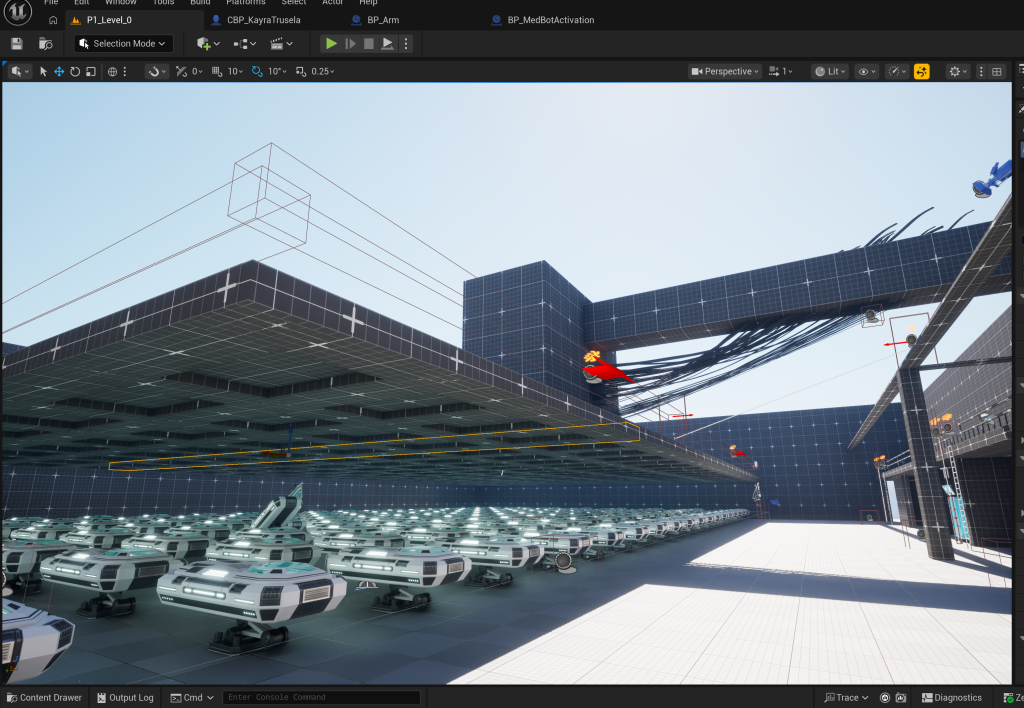
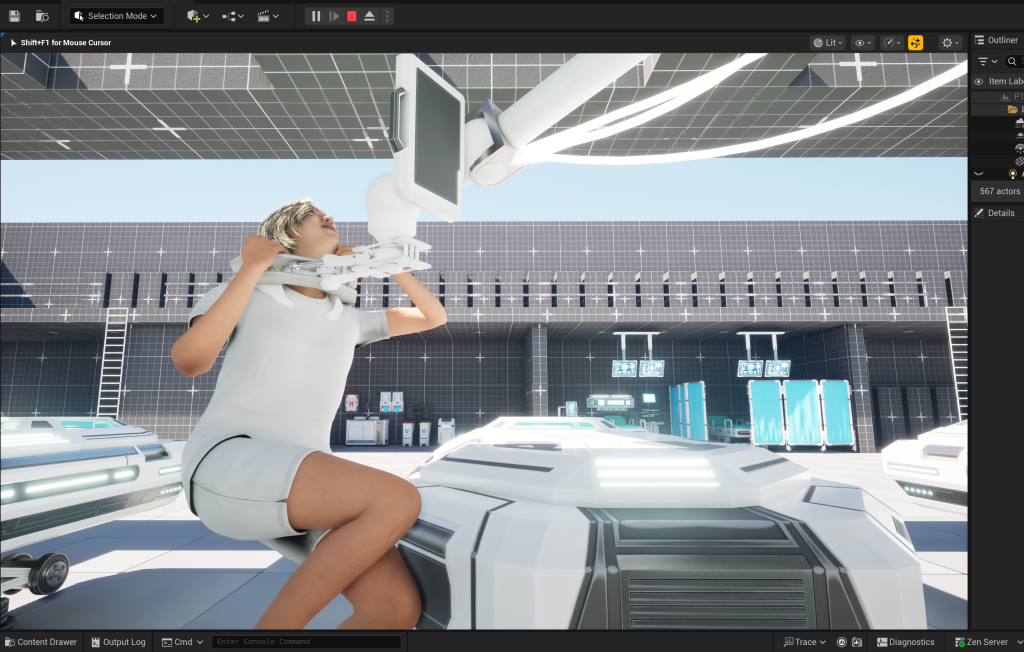

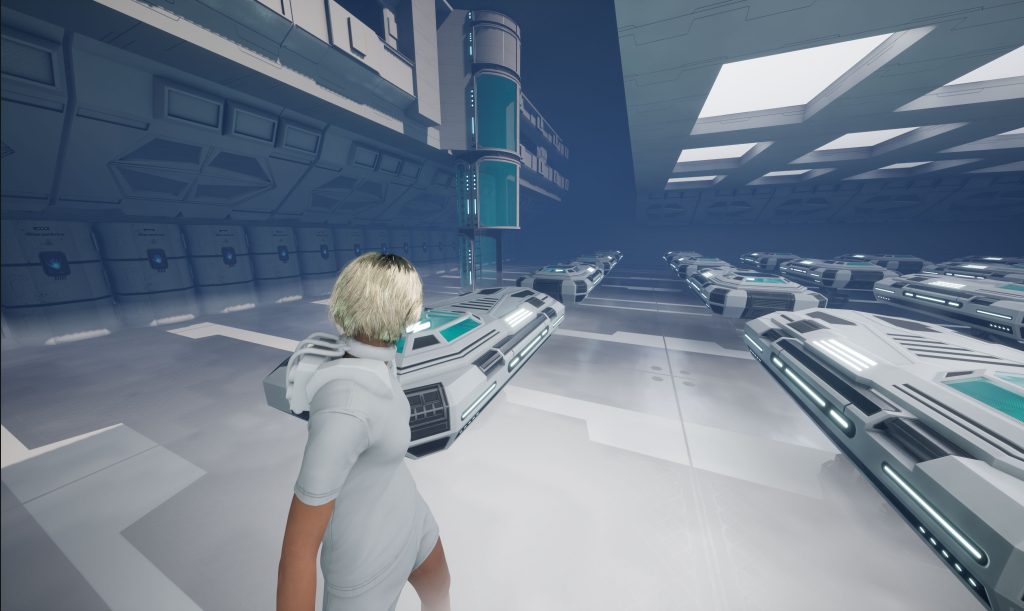

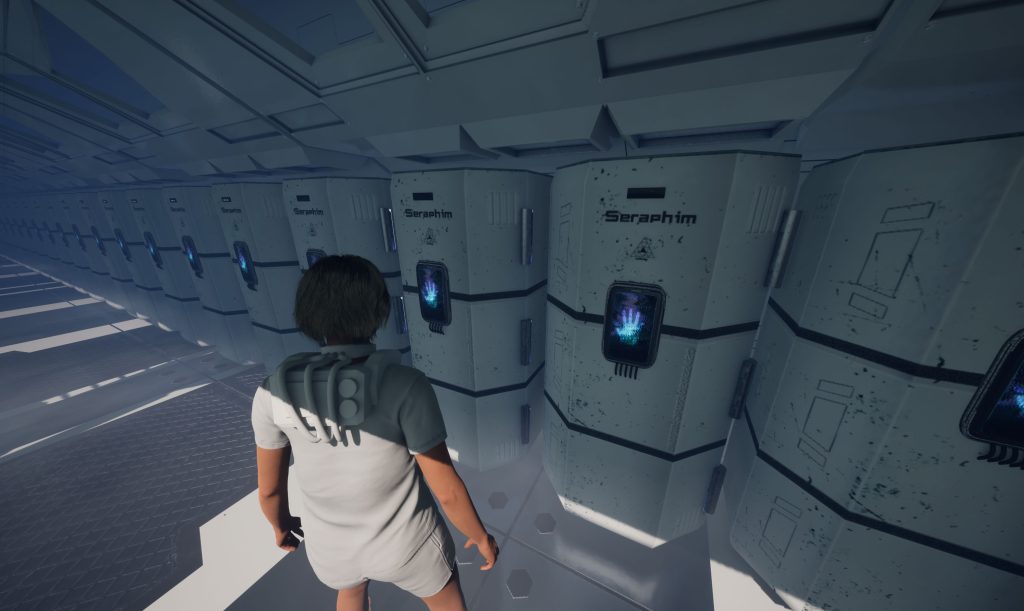
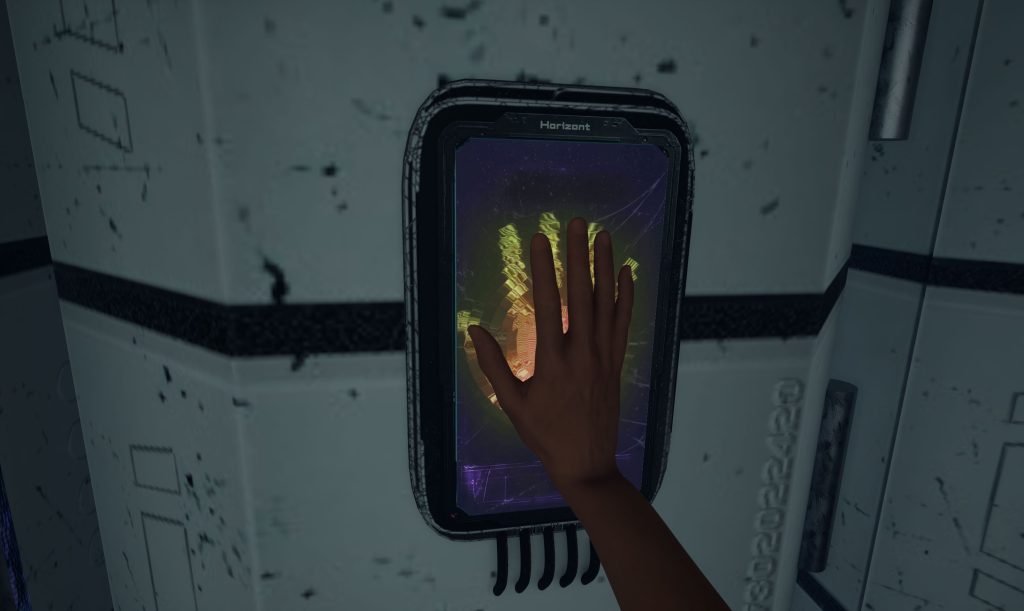
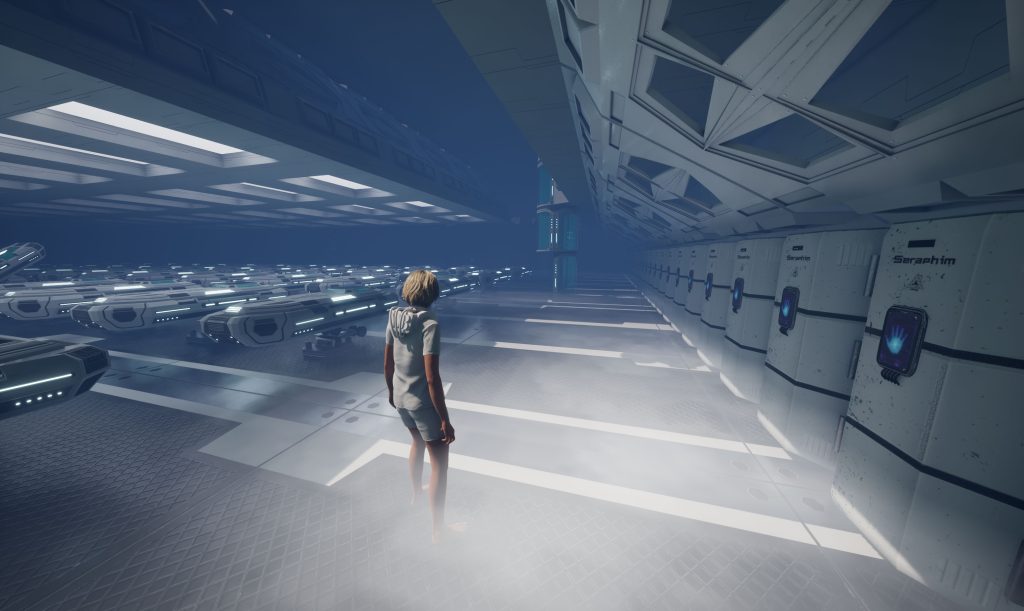
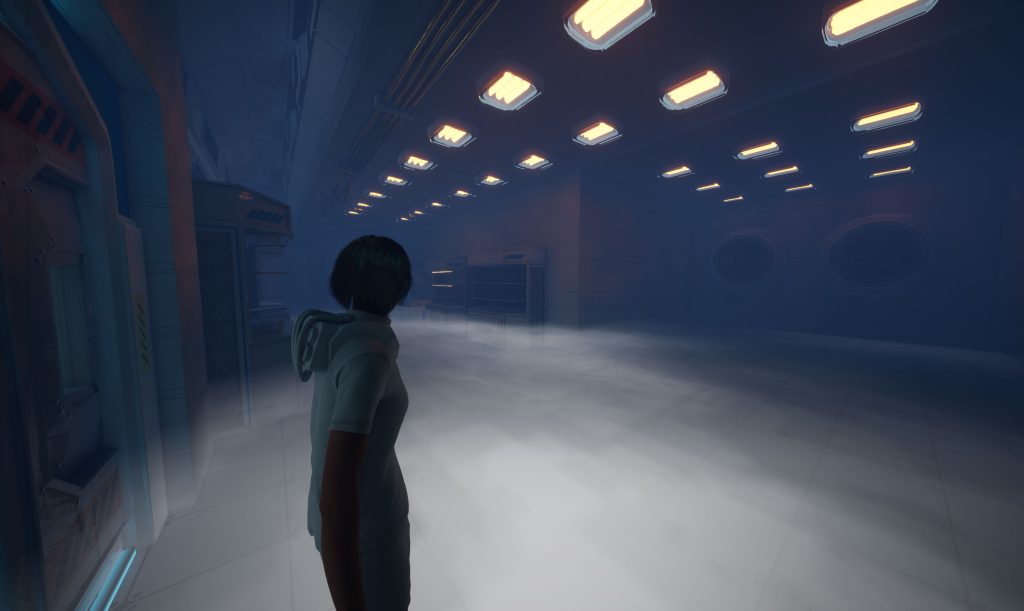
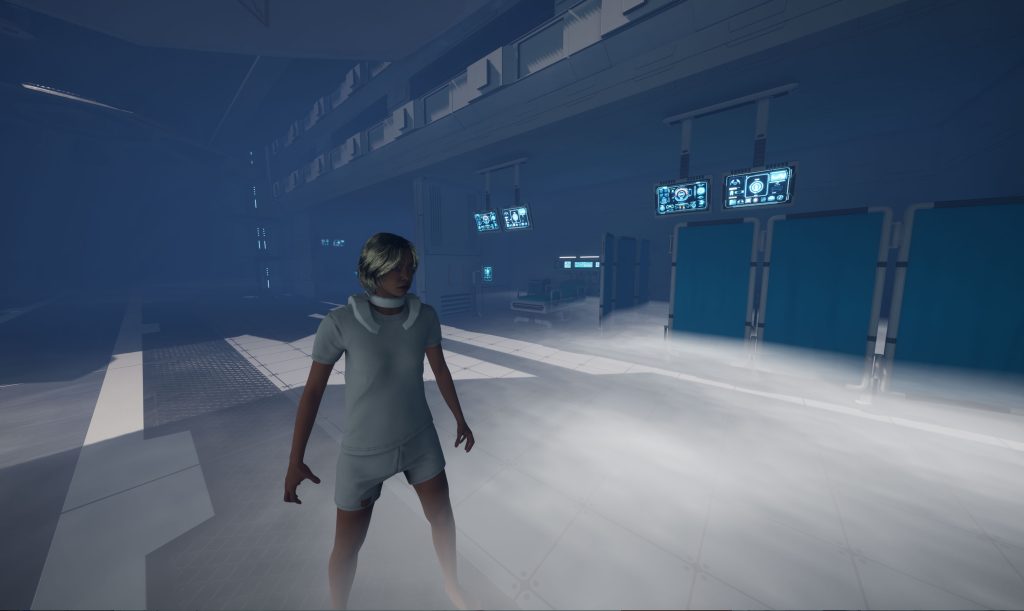






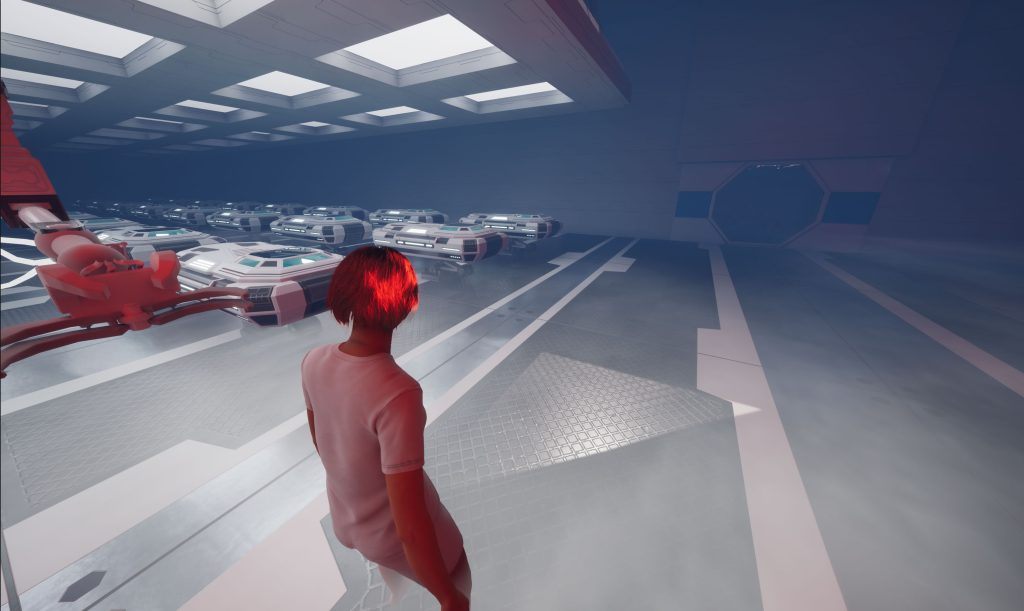
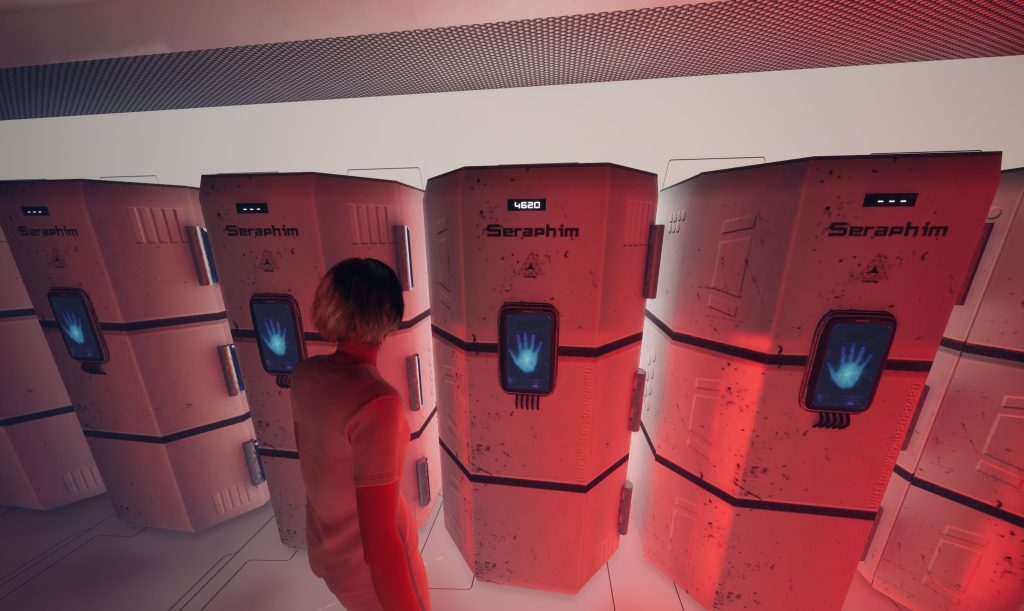
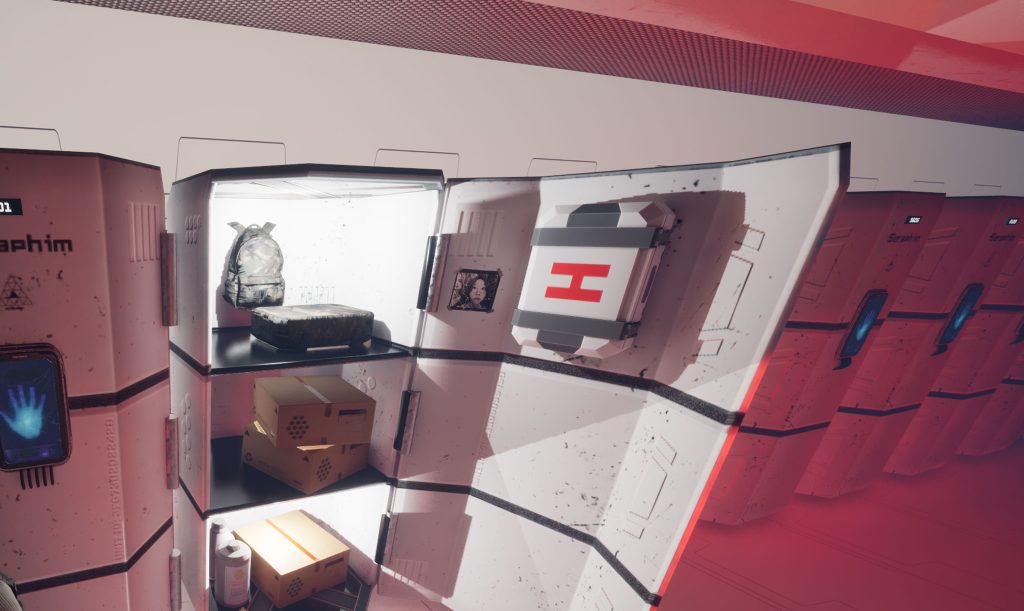
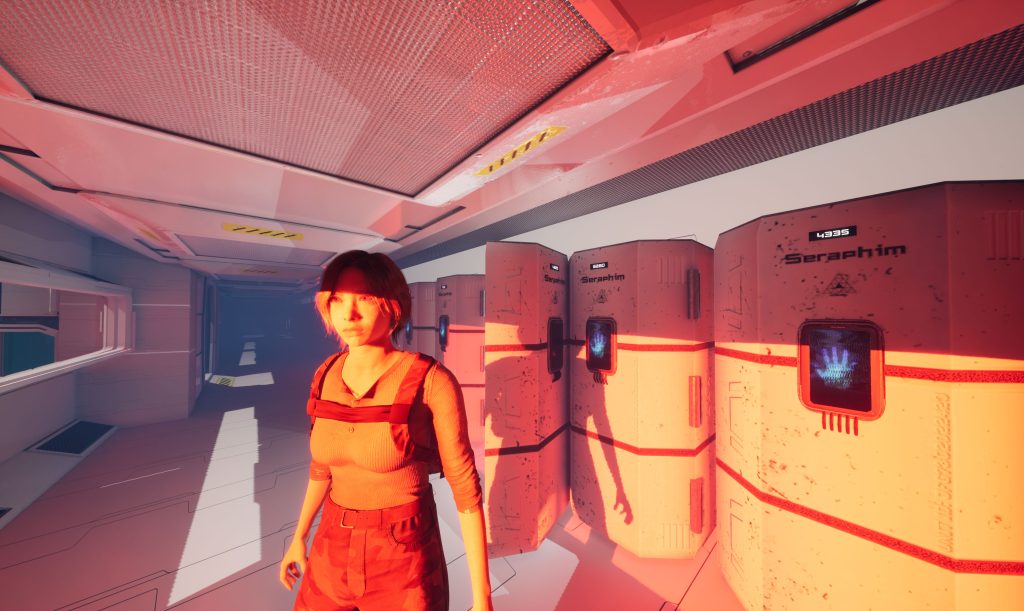
At this stage I moved on to the game design of the first scene—the one the game essentially begins with. Here I had to solve several problems tied to both lore and gameplay.
First of all, as I already mentioned, the game will not have any elements that feel unnatural to the environment, like a dot or a crosshair drawn in the middle of the screen. In my opinion, those things seriously damage psychological immersion, break the sense of depth, and throw off the player’s focus—even if they can feel very convenient during gameplay.
The same goes for the rest of the UI: health and stamina indicators, an ammo counter, and so on. In my view, removing all that visual noise will only enrich the game. And when the player actually needs to dig into the interface, then it will be interface—and only interface.
But doing this isn’t as simple as it might sound. Obviously I’m not the first to come up with this approach, and there are fairly canonical techniques for implementing this idea. But usually nobody bothers, or they only remove UI on the highest difficulties. I want it to be this way on every difficulty, so that any player can gradually get used to this style of game: listening to the character’s breathing to figure out when she’s tired, or mentally counting ammo…
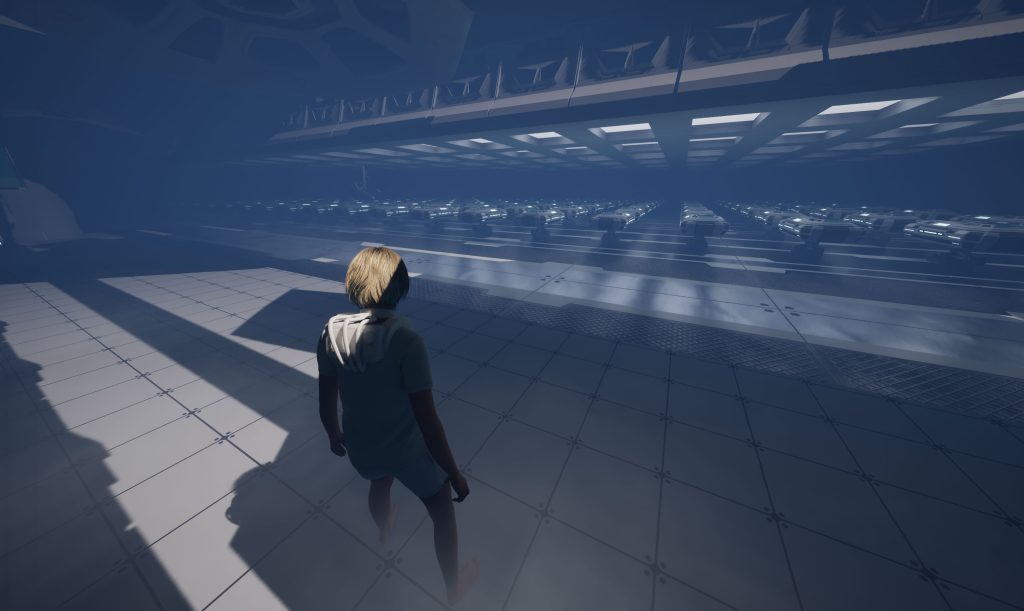
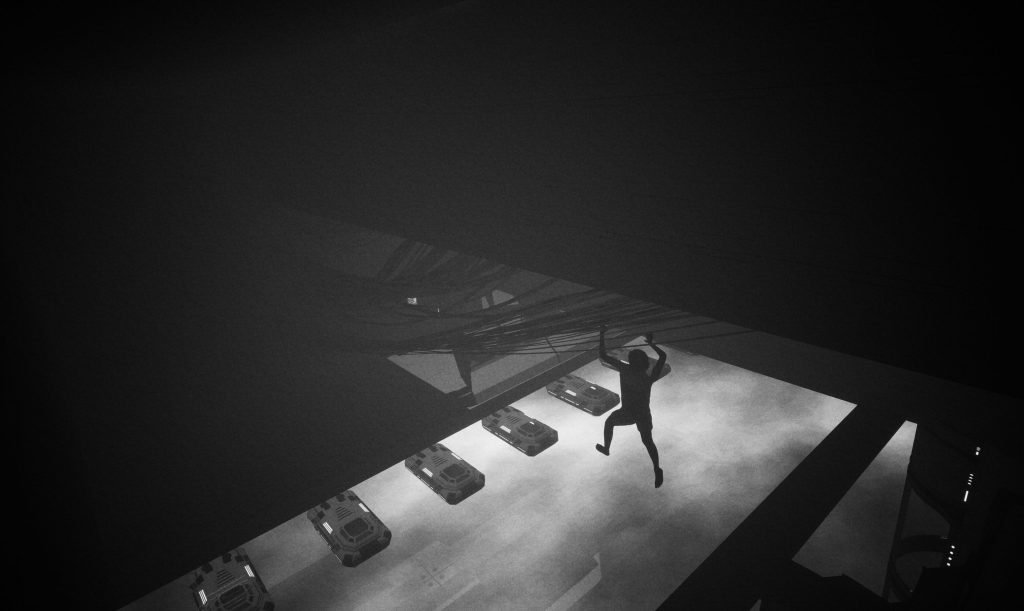
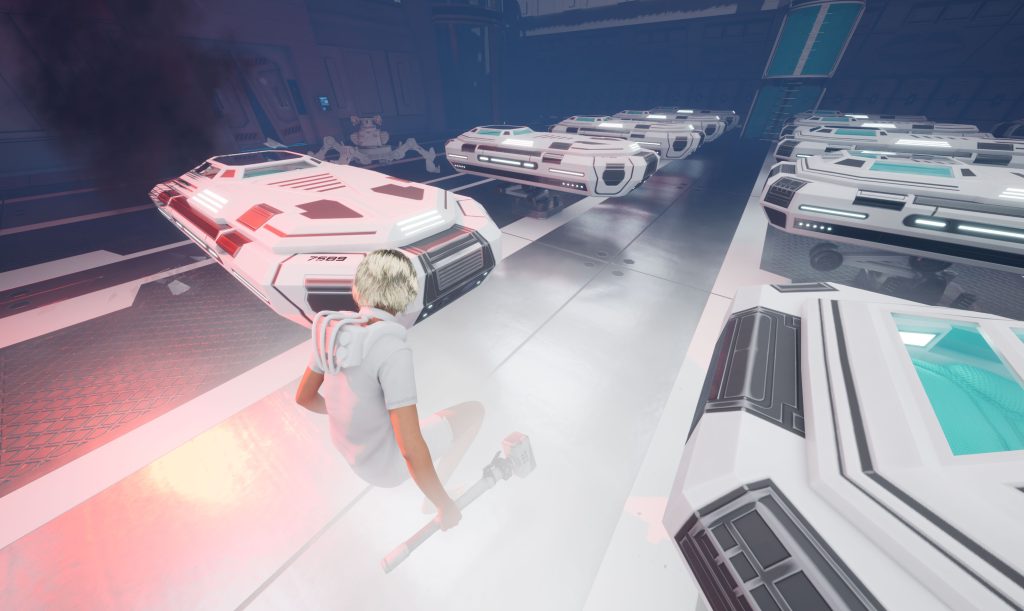
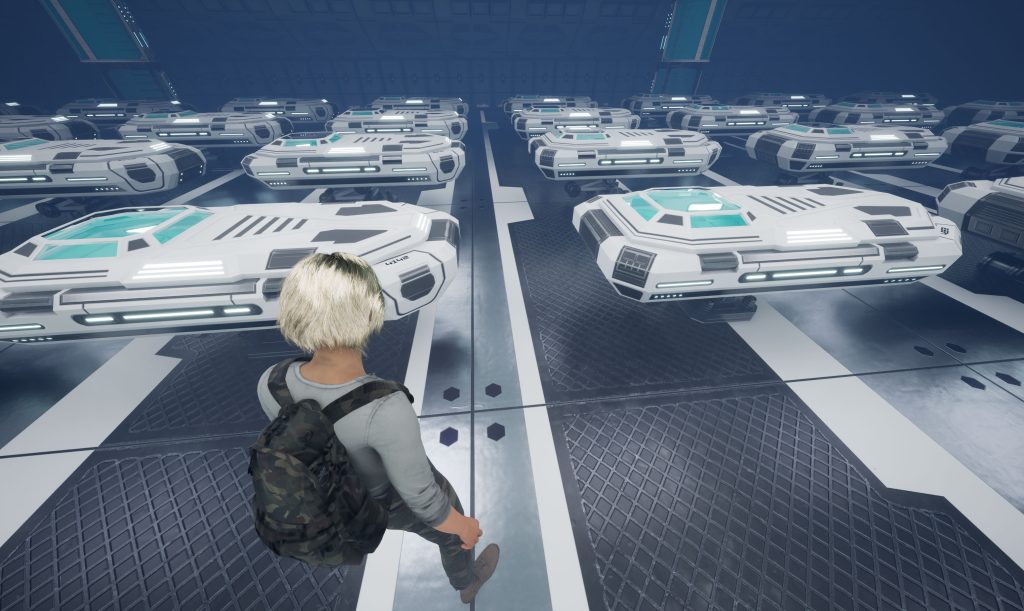
So: the girl wakes up in a cryosleep unit. She feels the aftereffects and slowly comes to. Around her are cryosleep capsules stretching to the horizon, and she notices that only her capsule is open. Soon, though, she realizes a safety protocol triggered after the system detected a failure in the life-support system. For some reason, the module responsible for metabolism and neuroactivity injected her with an extra-high dose of a substance meant for extreme resuscitation cases. The system interpreted that as a malfunction and immediately initiated the process of bringing the patient out of cryosleep. At least, that’s how it seems to our heroine at first.
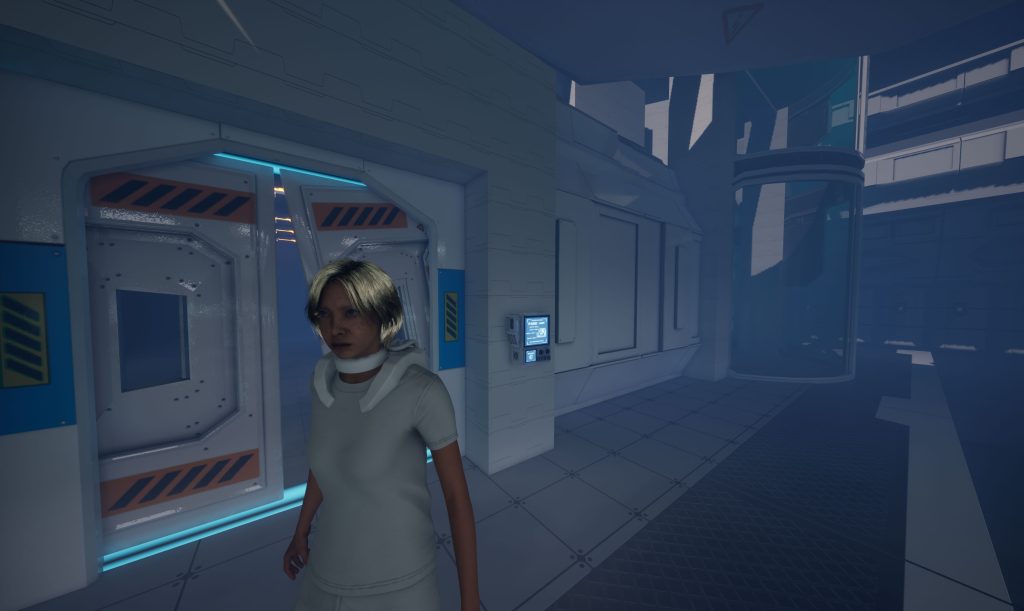
As a developer, it was important for me to convey her liminal state—to emphasize this frozen moment of transition from one condition to another. If you look at the attached screenshots, you can see the unit’s space resembles a cemetery more than anything medical. It also works in my favor that a cryounit is, by definition, “cryo”—meaning cold. So I can freely use swirling Freon (or whatever they use to freeze people). That ended up hiding the distant walls, and the effect of an endless cemetery got even stronger.
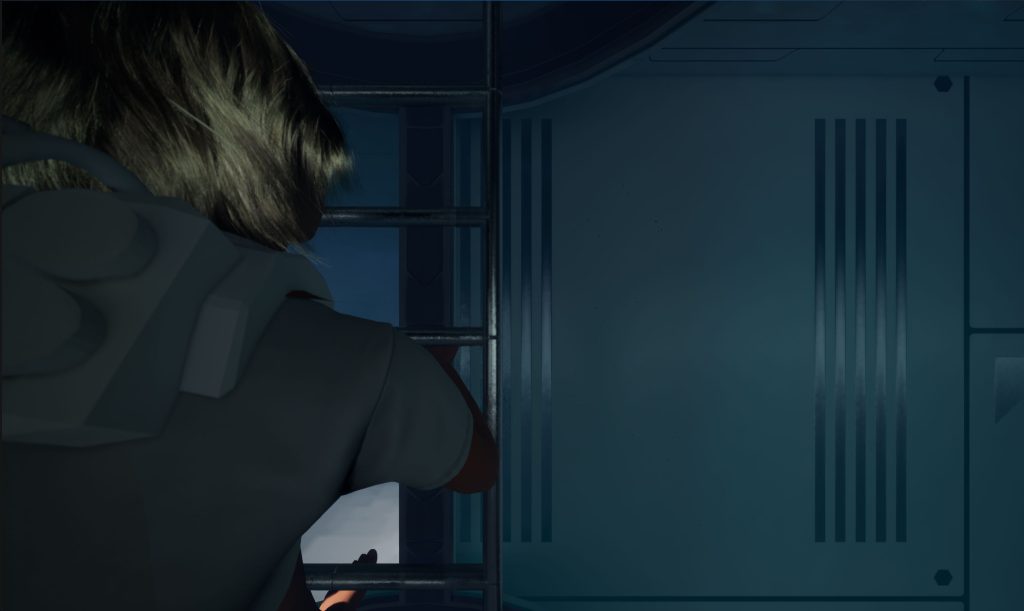
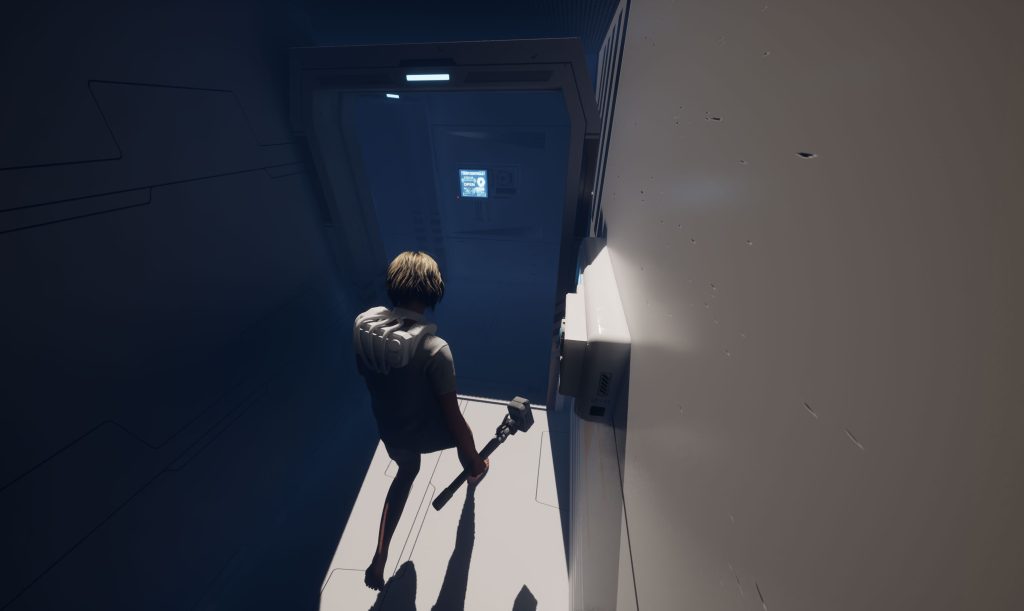
But beyond building the mood, I also need to solve purely functional things. First, the girl has to somehow get rid of the glitched cryo-thing that keeps injecting substances into her body; if you take too long getting rid of the cryo-assistant, after some suffering you can end up with a death screen in any location the girl manages to reach. Second, she needs to finally get dressed and clean herself up—unless someone decides they want to play the game barefoot and in boxer shorts.
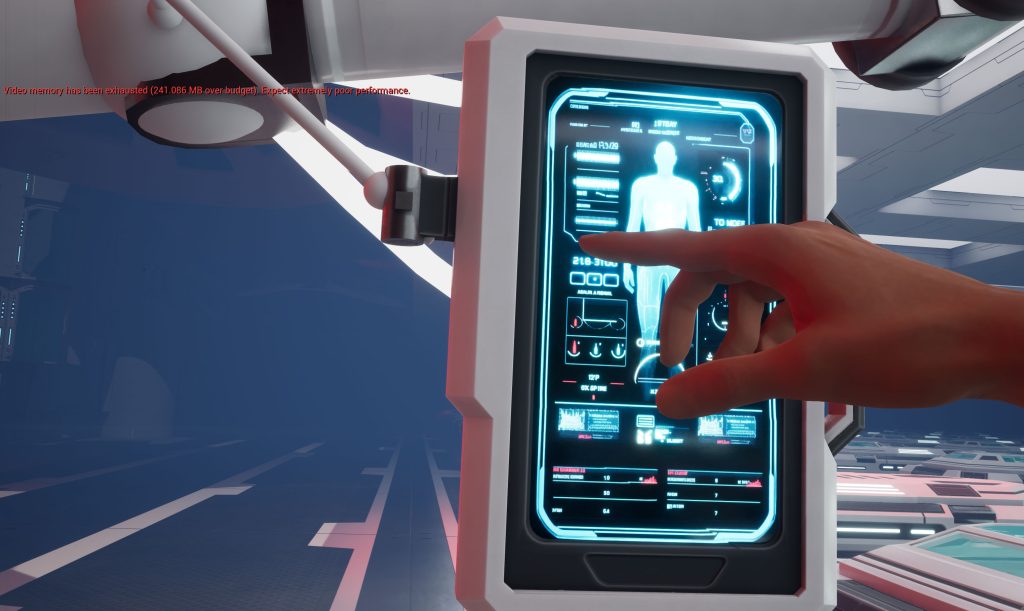
All the necessary elements—personal containers, cryosleep capsules, floors—I initially made as gray boxes that are easy to move around quickly and reshape the space. But the medical manipulator that has to remove the device from the heroine’s neck, the player’s personal container, the puzzle for passing a certain gameplay stage, stairs, and some terminals had to be made “for real,” because these are already scripted elements and I wanted to actually feel the gameplay rather than just walk around gray, depressing boxes.
As soon as I felt the gameplay was flowing dynamically enough, I switched straight to environment design and effects. On top of that, to capture the feeling of a specific moment, I had to do sound design too. That moment is in the attached location video—check it out. The idea is that I’m trying to keep the game as soundless as possible, because music and sound effects immediately boost emotions and color the player’s perception of the game—and that’s exactly what I don’t want. It’s important for me to achieve visuals and pacing that feel like they “sound” on their own, without a single sound. And then, at the end, go all-out with sound design and squeeze the maximum out of audio.
Here you can watch and track the location’s development—from gray boxes to a fairly detailed space. I deliberately don’t finish the location to 100%; I leave some rough edges in places so I can come back later with fresh eyes and slowly polish it to perfection.